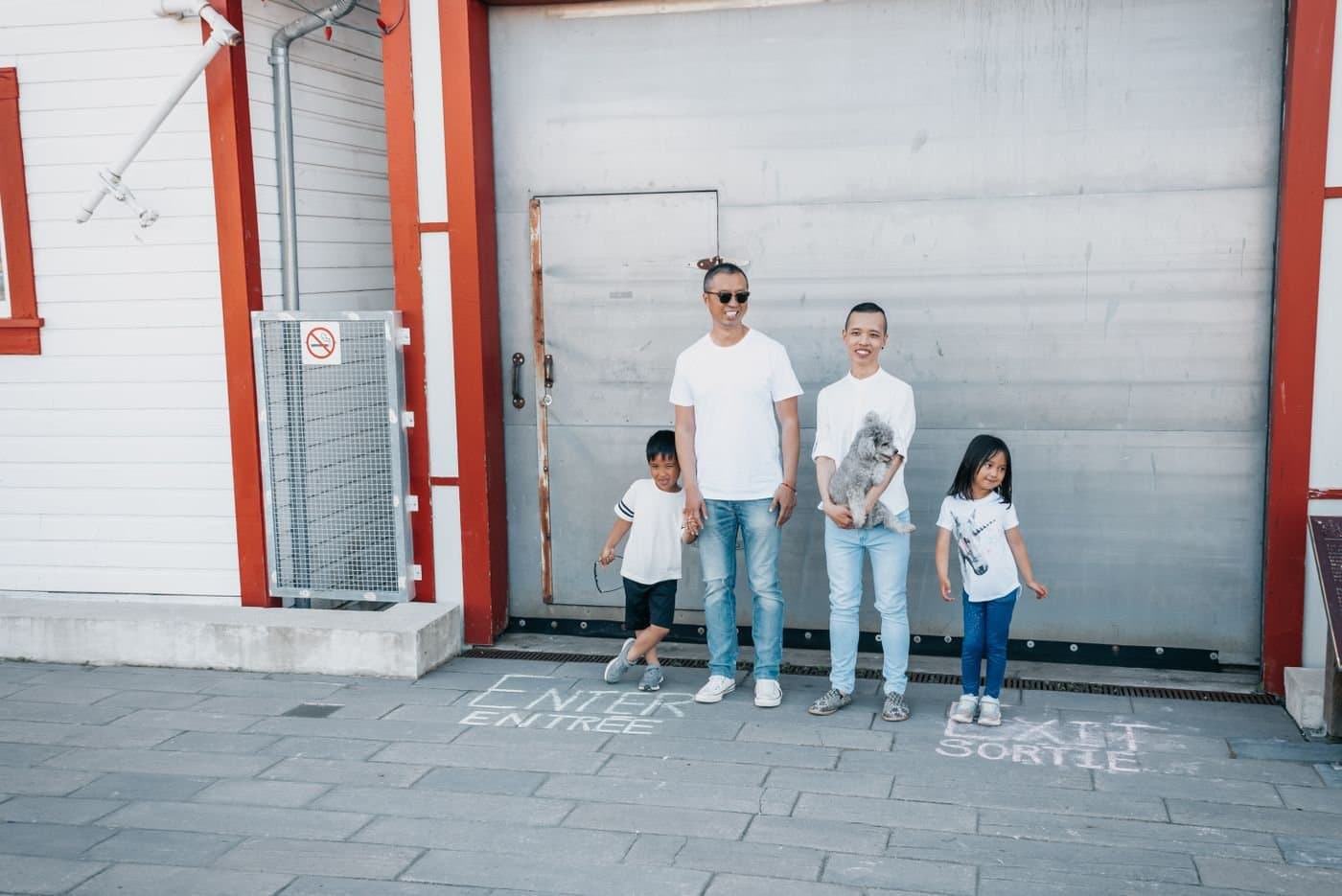
Mixed Asian and white families are not half of each world. They are a whole new one. The work is not balance on a scale. It is building a home where your child feels claimed by both stories.
Race, culture, and extended family expectations land differently when one parent is Asian and the other is white. Here is how some couples build clarity early.
Strangers, relatives, and sometimes friends treat mixed families like public curiosity. Which language will the baby speak? Will they look more like you or like him? Are you doing Chinese school? Church? Both? Neither?
When one parent is Asian and the other is white, those questions hit different nerves on each side. The Asian partner may hear judgment about assimilation or authenticity. The white partner may hear suspicion about whether they belong in cultural transmission at all. The child, eventually, hears all of it.
You cannot control every comment. You can control the story your home tells when the door closes. That story should not be "Mom's culture wins on Tuesdays." It should be "We are building a family with rules we chose on purpose."
Start early. Kids form identity long before they can explain it. The tone you set in the toddler years becomes the baseline they return to when school gets complicated.
Race is not the same as culture, but they overlap
Your child may be read as Asian in some rooms and ambiguous in others. That shifting visibility matters. Prepare for both experiences without treating one as more real.
Culture includes food, language, holidays, manners, humor, and unspoken rules about elders. It also includes how your family talks about achievement, emotion, and belonging. The white partner brings culture too, even when relatives call it default or neutral.
Name both. "In my family we talk straight to adults. In your dad's family we listen first. In our house we do a mix." Specificity beats vague we-are-all-human speeches that leave kids alone with concrete social puzzles.
If the Asian partner is first-generation and the white partner is third-generation, power dynamics may show up around who feels like the expert. Expertise is not automatic based on race. Humility on both sides helps.
Extended family asymmetry
Asian extended families often show up loudly: more opinions, more visits, more food, more group chat drama. White extended families may be quieter or may carry different assumptions about independence and privacy. Neither is automatically easier.
Couples need a plan for asymmetry. Who handles which side when conflict appears? How do you prevent the louder side from becoming the default culture in your home? How do you invite the quieter side without tokenizing one holiday per year?
The white partner may need explicit support entering Asian family spaces. Translate social codes. Share context before events. Debrief after. Do not leave them guessing and then call them disrespectful when they miss a cue.
The Asian partner may need protection from relatives who treat the white partner as temporary or inferior. United front language matters. "This is our family. We decide together."
Language choices without a winner
Bilingual plans often stall when one language feels like labor and the other feels like leisure. The Asian language may carry emotional weight, homework, and weekend classes. English may feel invisible because it dominates school.
Decide together what success looks like. Connection beats fluency theater. A child who greets grandparents warmly in a heritage language has gained something real even if grammar is imperfect.
White partners can learn alongside children. That modeling reduces the feeling that culture is Mom's homework everyone else tolerates.
If you skip formal bilingualism, be honest about why and what you will offer instead: stories, recipes, visits, media, community friends. Absence with explanation beats absence with silence.
Handling comments about appearance
Mixed kids often receive appearance commentary early: skin tone, eye shape, hair texture, who they favor. Some comments are loving. Some carry colorism. Some are plain racist.
Prepare responses your child can borrow. "I'm both." "We don't rank looks in our family." "Please don't comment on my body."
At home, praise character, effort, and joy more than features. When you compliment appearance, include the whole kid, not only the feature strangers fetishize.
If the Asian side carries colorism, address it directly with elders when safe. Your child's self-image is worth awkward conversations.
School, books, and representation
Classrooms may treat your child as Asian, white, or neither depending on the week. Build a home library and friend network that reflects their whole reality, not only one side's highlight reel.
Talk with teachers early about name pronunciation, holiday absences, and bullying patterns you have seen before. Polite advocacy prevents small erasures from stacking up.
White partners should not outsource all identity work to the Asian partner. Read books, learn history, show up at cultural events with willingness, not tourism.
Kids notice who treats their background as precious versus optional.
Marriage maintenance in the crossfire
You will misstep. The Asian partner may feel alone carrying culture. The white partner may feel permanently tested. Schedule check-ins that are not about logistics. Ask where each of you feels proud and where each feels tired.
Therapy with a culturally informed clinician can help when family pressure hits the marriage. This is not overkill. Mixed couples often navigate triple layers: two families, one public, and one private definition of success.
Your child does not need you to be perfect representatives of two continents. They need you to be a steady team that keeps learning.
That team is the culture that will matter most.
Creating rituals that are yours
Borrow from both families, then invent something new: Sunday noodles plus Saturday pancakes, Lunar New Year with your own silly photo tradition, Thanksgiving with a dish nobody's grandmother made but everyone requests now.
Original rituals tell children they are not a compromise. They are a creation.
Document them. Photos, recipes, short videos. Mixed families sometimes lose threads when elders pass. Your invented traditions become heirlooms too.
One Asian parent and one white parent is not a problem to solve. It is a family to build on purpose.
Preparing for school and stranger questions
Teachers and classmates will ask your child what they are in ways that feel blunt or confusing. Rehearse simple answers together. "My mom is Korean and my dad is Irish. I'm both." Role-play with humor so the questions feel less scary when they arrive.
Notify teachers about name pronunciation, family structure, and holidays you observe. Early contact prevents small erasures from stacking into a story that your child does not belong.
When strangers ask invasive questions in front of your child, answer briefly and redirect. "We are happy with our family. How about that weather?" Your child learns boundaries by watching you protect the family story without shame or long justification.
When one side of the family feels ignored
White grandparents may worry they have nothing to pass down while Asian relatives dominate language and food. Name that fear with your partner and plan inclusion on purpose. "We want your stories and recipes in our home too."
Schedule visits or calls with the quieter side so your child sees both lineages as active, not one as background.
Avoid compensating with tokenism: one Christmas photo is not balance. Repetition across ordinary weeks is balance.
Mixed children thrive when both sides feel invited to contribute real content, not only attendance.
Documenting both family trees
Make a simple family tree with photos and names from both sides. Include stories, not only faces. Children with visible roots ask fewer panicked identity questions later.
Update it when new cousins are born or when elders share old photos.
Both parents should contribute entries so one lineage does not look like footnote.
Planning for the questions your child will ask later
Older mixed kids ask harder questions: where do I belong, which box do I check, why do relatives treat my parents differently. Build a family FAQ over time with honest short answers you revisit as they age.
It is okay to say you are still learning too.
Your steadiness matters more than having every answer ready at age eight.