

When you're parenting across cultures
Guides on in-laws, heritage language, school pressure, elder care, and the questions you save for after the kids are asleep.
The Cub Notes
Warm scripts and grounding for diaspora families. One note when you need it, no spam.
From the club
Latest reads
News briefs and guides worth reading this week.

 Culture
John Boyega's Son Had Already Been Home
On October 4 he told The Guardian he had been married almost two years and that a baby boy was on the way. Ten days later he wrote that the boy had already been home for some time.
 Culture
Nam Chang-hee Told Listeners Before His Agency Did
On October 9 he told KBS Cool FM listeners that his wife, Yoon Young-kyung, is pregnant. The next morning T&N Entertainment said she is 23 weeks along, with a February due date. He had used that same show, on February 2, to set the wedding for February 22.
 Research
A Bleak Economy Story Lowered Marriage Plans in Japan
In a December 2025 experiment, 2,270 unmarried adults in Japan rated marrying in the next three years lower after a fake article about layoffs and falling wages. A hiring-boom version raised that rating. The predicted scores were 2.05 and 2.47 on a 0-to-6 scale.
 Research
Grandparents Are Covering the Hours and the Cash
AARP's 2026 survey of 3,283 U.S. grandparents finds those who help average more than 500 hours a year, and spending averages $2,654 once grandparents who spent nothing are included. AAPI grandparents are the group most likely to be there almost every day.
City Life Planners
Find your city
Local ideas for dates, schools, family outings, community life, and the practical parts of building a family.
View all City Life Planners →
Dating, without the spiral
Marriage timelines, introductions, secret relationships, and low-stakes dates when the apps feel louder than your calendar.

On Yuzu, Gen Z Puts Friends Ahead of Romance
Yuzu's Summer Friendships survey found 83% of respondents valued friendships over romance, while about half often felt lonely. A separate UCLA study of single 18-to-24-year-olds found satisfying friendships helped sort who was happy.
- Dating
Have Dating Apps Become Event Companies?
Tinder's Events tab is in about 20 cities, and Bumble is taking over bars for mixers. Paying users are down. The apps are betting people would rather show up than keep swiping.
- Dating
Nearly Half of Adults Are Single. Many Prefer It That Way.
A February 2026 Harris Poll finds 46% of U.S. adults single, with rising preference for intentional singlehood, stronger friendships, and a named middle lane of talking stages and situationships.
- Dating
Young Adults Want Serious Dating. Most Are Barely Dating at All.
A nationally representative IFS and Wheatley survey finds only about one in three unmarried 22-to-35-year-olds date monthly or more. Most still want serious relationships. Money and confidence, not commitment phobia, are the brakes.
- Dating
Most Daters Message About One Tier Higher
On a major dating site in four U.S. cities, men messaged about 26% up a desirability ladder and women about 23%. Replies fell as the gap grew. A later speed-dating study found overestimators were choosier and walked away with fewer matches.
- Dating
Social Media Is Judging Your Dating Life Harder Than the Apps Are
Hily's 2026 Dating T.R.U.T.H. Report finds Gen Z daters feel watched for not enough dates, not glamorous enough dates, and partners who look too ordinary. Most of that judgment is imaginary.
Start with what you need today
Pick the door that matches the thought keeping you up tonight.
I am thinking about kids
Timing, money talks, and pressure from parents who want grandbabies yesterday.
I am pregnant or postpartum
Bodies, feeding pressure, visitors, and the first months at home.
I need help with grandparents or in-laws
Boundaries, guilt, childcare help, and the partner conversation you keep postponing.
I am in a mixed family
Holidays, names, clumsy relatives, and helping kids feel whole.
School or achievement pressure
Education anxiety without turning childhood into a resume.
I am supporting aging parents
Long-distance care, remittances, and sandwich-generation logistics.
Browse by stage of family life
Planning, babies, school years, elders, and the partnership holding it together.
- Planning
Family Planning
Timing, money, and parent pressure
- Early Years
Pregnancy & Baby
Bodies, feeding, visitors, first months
- Parenting
Toddler Years
Routines, language, daycare chaos
- Identity
School & Identity
Belonging at school and online
- Family Dynamics
Grandparents & In-Laws
Help, guilt, and boundaries
- Multicultural
Mixed Families
Names, holidays, clumsy comments
- Partnership
Marriage & Co-Parenting
Labor, stress, staying connected
- Heritage
Food & Traditions
Dinner table, language, rituals
Dads, too
Fatherhood, co-parenting, sons, and standing beside your partner when the elders arrive.

The week he wanted off, and didn't take.
In a survey of 4,290 Ohio fathers, wanting leave and not taking it came with about three times the odds of depression symptoms, and of anxiety symptoms. Money was the reason struggling fathers named most often.
- Dads
How to Be the Fun Dad and the Useful Dad (Not Either/Or)
Play and logistics are not rival personalities. How fathers can be the parent kids light up for and the one who owns bedtime, meals, school bags, and recovery nights, with rituals that do both at once.
- Dads
The Asian Dad Learning to Be Emotionally Present
Many fathers were raised to provide and stay steady, not to talk about feelings. Emotional presence is a skill you can learn without becoming someone else, using small rituals, repair, and curiosity instead of dramatic speeches.
- Dads
Raising Sons Who Talk About Feelings
Boys in many Asian families learn early to hide sadness, fear, and need. Fathers can change that pattern without making sons soft or ashamed, using modeling, side-by-side talks, and protection from relatives who mock sensitivity or call tears weakness.
- Dads
A Dad's Guide to Being Useful During Postpartum
Postpartum is not a vacation for one parent and a project for the other. Concrete ways fathers can be genuinely useful when the house is running on fumes, from night shifts and visitor gatekeeping to inventory, appointments, and emotional support without scorekeeping or performative heroics.
- Dads
Modern Fatherhood and the Silent Dad
Many men become fathers while still carrying the silent dad model from childhood. How to update fatherhood without losing steadiness or respect, using small verbal habits, tech boundaries, and repair that your children can feel across years instead of inheriting the same lonely distance.
- Dads
How Fathers Handle Their Own Parents After a Baby Arrives
A new baby rearranges every relationship, including the one between you and your parents. How dads can set boundaries, show gratitude, and stay aligned with their partner when cultural expectations pull hard in every direction.
Grandparents, in-laws, and filial piety
Love, guilt, help that becomes control, and the scripts you wish you had last Sunday.
The week she already works.
AARP's 2026 survey of 3,283 U.S. grandparents finds those who help average more than 500 hours a year, and spending averages $2,654 once grandparents who spent nothing are included. AAPI grandparents are the group most likely to be there almost every day.
- Grandparents & In-Laws
Living With In-Laws Under One Roof
How diaspora couples survive multigenerational housing—rent, childcare, kitchen control, and the partner conversation when parents move in "just for a few months."
- Family Dynamics
How to Set Boundaries With Grandparents
Scripts and frameworks for diaspora families setting visit limits, childcare rules, and pushback on advice—from drop-ins and weight comments to in-laws who help daily.
- Family Dynamics
When Grandparents Clearly Favor One Grandchild
How diaspora parents respond when elders compare grandchildren, prefer boys, lighter skin, or one parent's side of the family, and how to protect the kids who notice.
- Grandparents & In-Laws
Filial Piety and Boundaries in a Modern Family
Honoring parents and protecting your own household can feel like opposite commands. Here is how some families hold both without living in permanent guilt.
- Grandparents & In-Laws
How to Accept Help Without Handing Over Your Household
Grandparents want to help. You need the help. You also need your routines, rules, and voice at home. Here is how to take support without losing the wheel.
- Grandparents & In-Laws
How to Say No to In-Laws Without Starting a War
Declining an in-law's offer or opinion can feel dangerous. Clear scripts and strategies for peace where possible, distance where necessary.
Mixed and multicultural families
Naming, holidays, language, family acceptance, and belonging without performance.
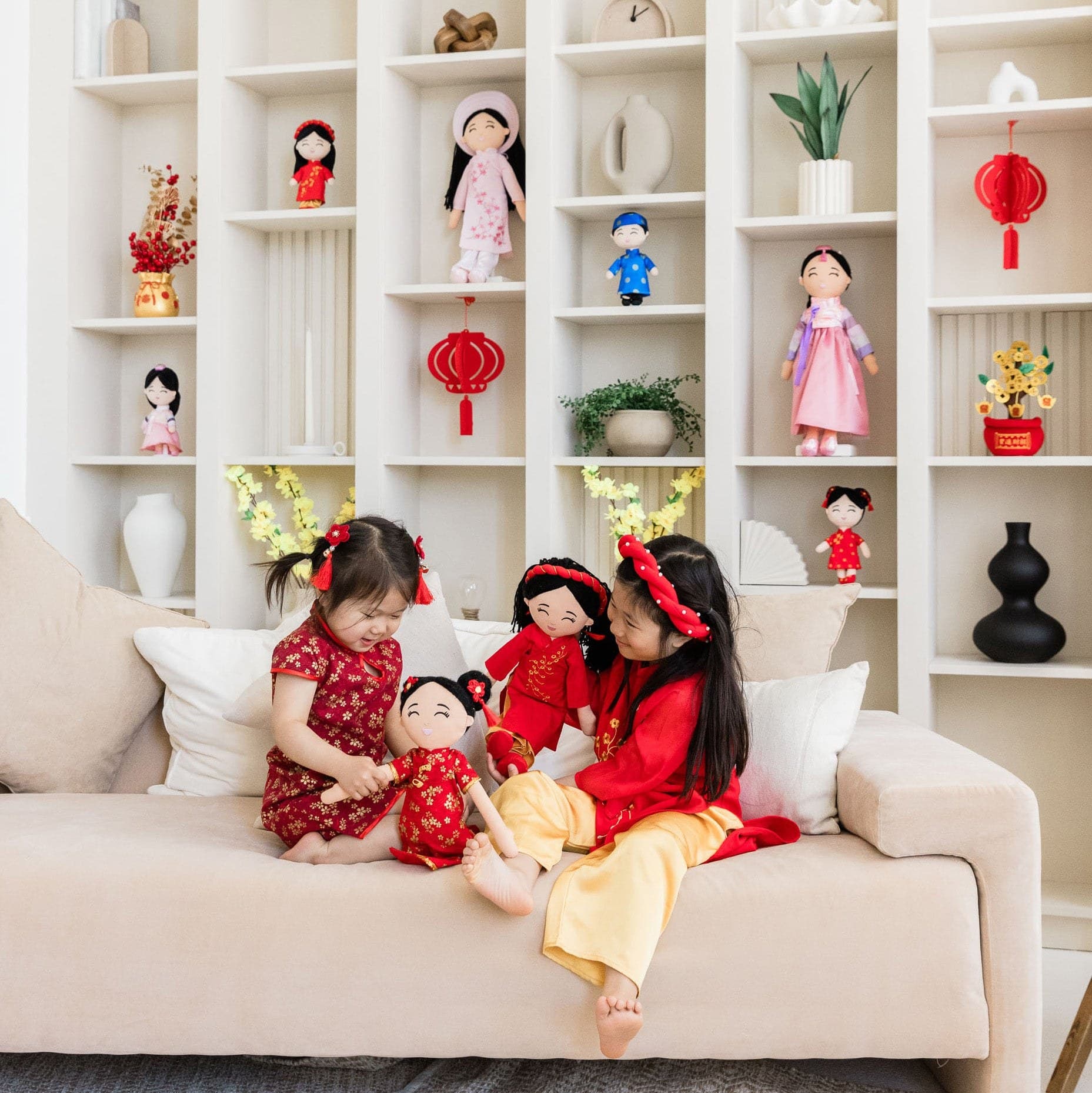
The doll aisle caught up before the relatives did
Culturally specific Asian dolls, a founder's Dragons' Den pitch, and scripts for when relatives still treat heritage play as optional.
- Mixed Families
Helping Kids Get Close to a Culture You Are Reconnecting With
You may not speak the language fluently or know every ritual. You can still raise kids who feel connected to heritage you are learning alongside them.
- Mixed Families
When One Parent Is Asian and the Other Is White
Your child sits at a crossroads you and your partner navigate daily. How to build a family culture that honors both sides without forcing a false split.
- Mixed Families
Which Holidays Do We Celebrate?
Lunar New Year, Christmas, Diwali, Thanksgiving, Eid: mixed families often inherit more than one calendar. How to choose without guilt or exhaustion.
- Family Planning
A Mixed-Couple Guide to Naming Your Baby
Choosing a name when two families, two languages, and two sets of expectations meet in one small word.
- Mixed Families
Raising Mixed Kids When Relatives Make Clumsy Comments
Aunties mean well. Cousins joke. Grandparents forget filters. Here is how to protect your child without cutting off the whole family tree.
- Mixed Families
When Your Non-Asian Partner Doesn't Share Your Family Obligation
You were raised to show up for elders. Your partner was raised to build a separate household. Neither is wrong, but the gap can feel lonely.
When you need something gentler
For the days you are anxious, overwhelmed, or quietly convinced you are doing it wrong.
Postpartum Depression When Your Family Does Not Say the Words
How diaspora mothers and fathers recognize postpartum anxiety or depression when relatives call it tiredness, weakness, or ingratitude—and how to get care anyway.
- Mixed Families
A Gentle Guide to Mixed-Family Parenting
For families blending cultures, races, and traditions with room for imperfection, growth, and a lot less performance than Instagram suggests.
- Culture & Identity
When Your Child Asks Why You Left Your Country
Age-appropriate ways to answer "why did we leave?" when your child is American-born, you left as a teen, or the story includes war, poverty, and grandparents who still live far away.
- Pregnancy & Postpartum
Miscarriage and Pregnancy Loss When Family Wants You to Move On
How diaspora couples grieve miscarriage or stillbirth when relatives push quick recovery, new pregnancy timelines, or silence about what happened.
- Baby & Toddler
The First Year With Baby When Family Is Far Away
Raising a baby an ocean away from grandparents, aunties, and the village you wish were next door.
- Health & Body
When Your Family Does Not Believe in Rest
In many Asian households, rest looks like laziness. Here is how to protect your body and your child's nervous system without feeling like you are betraying your family.
Your relationship still matters
Parenthood doesn't pause marriage, partnership, or the adult life you're still building. Marriage, co-parenting, in-laws, elder care, and division of labor, framed for real life, not just baby milestones.
Dating When Parents Keep Asking When You Will Marry
What to say when relatives ask "still single?" at every dinner, how U.S. median marriage ages compare to auntie timelines, and how to date without letting shame run the calendar.
Read →RelationshipsFighting About Wedding Costs (When the Spreadsheet Becomes the Third Partner)
Benchmarks, who-pays scripts, and boundary plans when diaspora families expect a big wedding, parents offer money with strings, or you are drowning in vendor deposits.
Read →Grandparents & In-LawsLiving With In-Laws Under One Roof
How diaspora couples survive multigenerational housing—rent, childcare, kitchen control, and the partner conversation when parents move in "just for a few months."
Read →Grandparents & In-LawsWhen your partner won't stand up to their parents
You need a united front with in-laws, but your partner goes quiet every time their parents push. How to respond without turning marriage into a battlefield.
Read →PartnershipMarriage before kids
Questions that help you align on values, division of labor, family involvement, and identity before the stakes feel higher and the sleep feels lower.
Read →Family DynamicsIn-law boundaries after baby
When elders want to help and you need boundaries, a practical guide to aligning with your partner and finding balance between gratitude and autonomy.
Read →