Helping Kids Get Close to a Culture You Are Reconnecting With
Reconnecting with culture as an adult is not failure. It is a common mixed-family story. Your child does not need you to be a perfect ambassador. They need you to be a curious companion.
Many parents grew up assimilated and return to heritage when raising kids. Here is how to explore culture honestly without pretending you never lost touch.
When you feel like an impostor in your own heritage
You understand more than you speak. You cook three dishes from memory and Google the rest. You hesitate before holiday gatherings because you forgot the order of greetings. You worry relatives will clock you as too American while your child watches.
Many second-generation and mixed parents reconnect with heritage through parenthood. Babies make elders appear. School makes difference visible. Something wakes up and says: I want this child to have what I only half received.
Shame often arrives with that desire. Shame is not a good teacher. Your child does not need your fluency on day one. They need your willingness to learn without pretending you know everything already.
Reconnecting together can become one of the most honest gifts you offer: culture as living practice, not performance of perfection.
Tell the truth about your story
Kids detect pretense. Say plainly: "I did not grow up speaking this language every day. We are learning together." "Grandma knows more than me. We ask her." "I feel nervous at temple too sometimes. We can go anyway."
Honesty prevents the day your teenager discovers you exaggerated fluency and feels betrayed.
Share why reconnecting matters to you now. "I want you to feel at home in more than one place." "I miss parts of what I lost." Children respect motive even when skills are uneven.
If you are mixed and reconnecting through one parent's lineage, name that clearly too. "We are exploring my mom's side together. Your dad brings his own stories."
Use elders without outsourcing your role
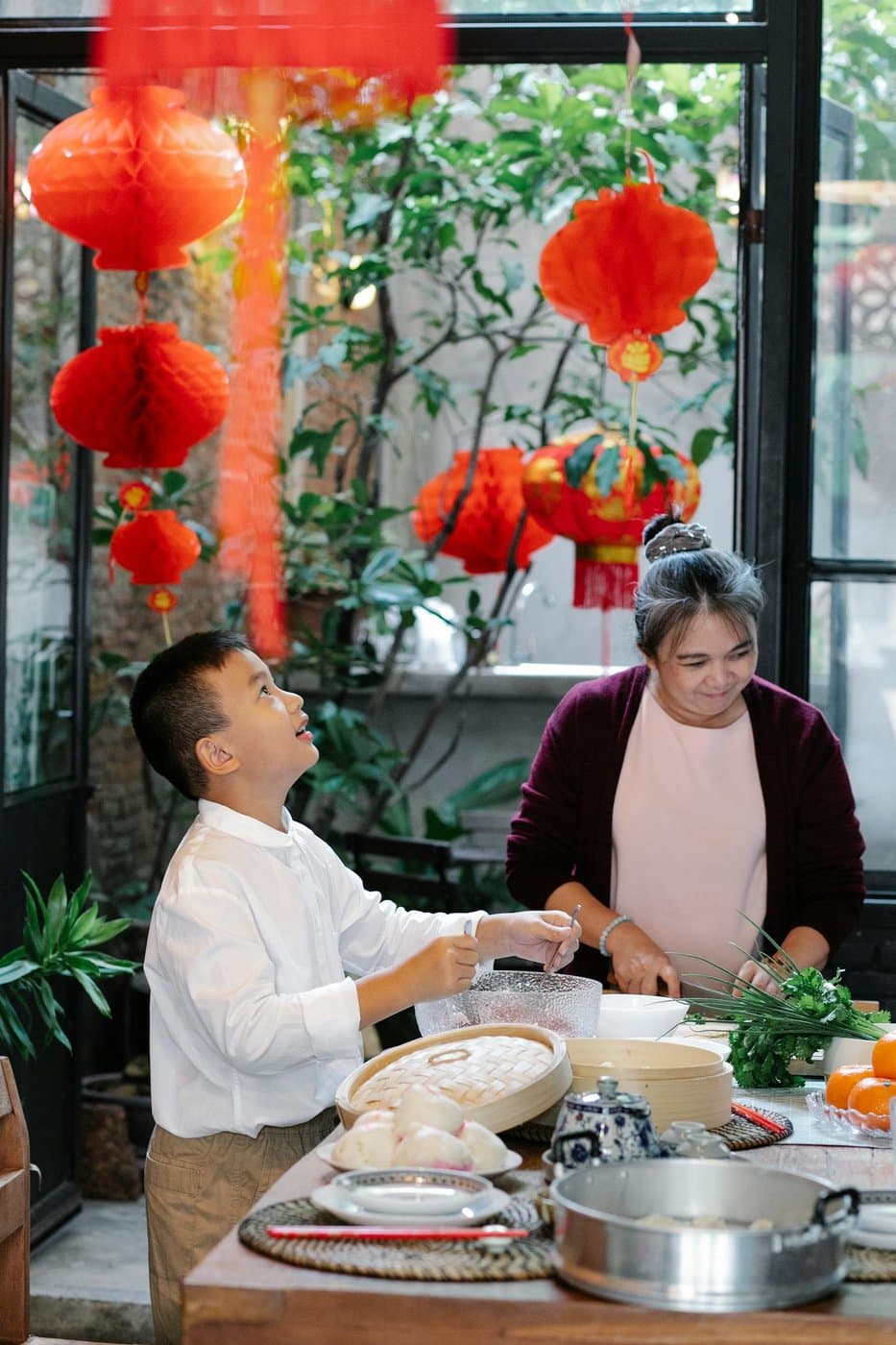
Grandparents, aunties, and community elders are gold when they are kind. Schedule specific learning time: cooking, language calls, holiday prep. Prepare your child beforehand. "We are visiting to learn dumplings."
You remain the primary interpreter of what sticks in daily life. Elders may visit monthly. You are home every night.
If elders criticize your reconnecting as too little too late, protect your child from that shame. "We are doing our best. Please encourage us." Distance from harsh teachers when needed.
Community classes and heritage schools help even when your accent wobbles. Showing up matters.
Build culture into ordinary days
Heritage does not only live in gala events. Put music on during cleanup. Label house objects in two languages. Celebrate small wins when your child uses a new word. Cook one familiar dish on tired nights instead of saving culture for perfect weekends.
Books, shows, and games in heritage languages lower pressure compared with flashcards alone.
Food is often the gentlest on-ramp. Taste creates memory faster than lectures.
Ordinary repetition beats rare cultural marathons that exhaust everyone.
When your partner is learning too
In mixed couples, the non-heritage partner's participation sends a powerful signal. Invite them without demanding instant mastery. Shared learning reduces the burden on one parent and tells kids both sides matter.
Divide roles by interest. One partner handles language apps. One handles holiday logistics. One handles family calls.
Avoid making heritage the Asian partner's solo homework while the white partner gets labeled supportive audience only.
Handling mistakes and correction
You will mispronounce words. You will forget customs. You will burn dishes. Laugh lightly when possible. Correct publicly if someone offers kindness. "Thanks for teaching us the right way."
Model repair. Kids need to see adults learn without collapsing into shame.
If community members gatekeep harshly, find warmer doors. Gatekeeping hurts reconnecting families especially.
Identity beyond fluency scores
Connection is broader than language level. Stories, values, humor, grief rituals, and food memories all count.
Ask what you want your child to feel: welcomed by relatives, proud at school, not alone when someone comments on difference. Work backward from feelings to practices.
Some children will embrace heritage deeply. Some will resist. Keep the door open without force.
Document the journey
Photos, voice memos of relatives, recipe cards with your child's handwriting, a folder of phrases you learned together. Reconnecting families sometimes lose elders suddenly. Documentation preserves what you rebuilt.
Years from now your child may thank you not for perfect fluency but for proving culture can be reclaimed with love and steady small steps.
You are allowed to be both student and parent. That combination may be the most modern tradition you pass down.
When your child resists the culture you are reclaiming
Some kids push back against language class, temple visits, or heritage food while peers pull them elsewhere. Resistance is not always rejection of you. It may be normal identity experimentation.
Keep doors open without force. Offer choices within bounds. "You pick one heritage activity this month." Stay curious about what they do enjoy and build from there.
Share your own mixed feelings when honest. "I did not love this as a kid either. I want us to try again together." That vulnerability can land better than lectures about lost heritage.
Reconnecting parents sometimes mourn the child who does not mirror their fantasy. Grieve privately if you need to. Publicly, keep invitation alive. Many teenagers return to heritage on their own timeline when early years felt like pressure, not pride.
Finding community beyond relatives
Relatives are not the only teachers. Language playgroups, cultural centers, places of worship, and parent friends reconnecting alongside you can reduce pressure on imperfect family visits.
Community gives your child peers who share parts of their story. Peers matter as much as elders for belonging.
If local community feels gatekeepy, start small: one class, one festival, one friend. Build from warmth, not from proving authenticity.
Celebrating progress without grading it
Track small wins privately: a new phrase, a recipe attempted, a question asked at a gathering. Progress diaries help on days when shame says you are too late.
Do not turn heritage into a report card for your child or yourself. "We tried" is a valid family value.
Reconnecting is a marathon measured in seasons, not in fluent speeches at age five.
Using technology without replacing relationship
Apps, videos, and online tutors help, but children still need faces and stories. Pair every screen resource with one human connection when possible.
Schedule monthly calls with relatives who enjoy teaching. Short beats long if warmth is present.
Technology is scaffolding. Relationship is the house.
Partner and child as co-learners
Let your child teach you a phrase they learned at school while you teach them one from a relative. Flip the expert role sometimes.
Co-learning reduces shame and increases play.
Heritage sticks better when nobody pretends to be the finished teacher.
Language apps, classes, and realistic goals
Set goals you can sustain: twenty minutes three times a week beats heroic weekends that collapse. Celebrate streaks without punishing breaks.
If a class feels harsh or shaming, switch teachers or formats. Heritage learning should not replicate the shame that made you drift away.
Joy keeps doors open longer than drill alone.
Travel and homeland visits when affordable
If you can visit a homeland or elder community even briefly, children feel scale and warmth that videos cannot replace. Plan low-pressure trips focused on people and food, not performance of fluency.
Short meaningful travel beats expensive heritage camps that feel like punishment.
Connection memories anchor identity for years.
Food as the first and last teacher
When language fails, food often still speaks. Let children help chop, stir, and taste even when recipes are messy.
Name dishes with stories attached. "This is the soup your grandmother made when she was tired."
Stories turn meals into heritage without quizzes.
Letting go of the fantasy child
You may imagine a child who wins language contests and charms every elder. Real children have moods, refusals, and their own tastes. Love the real child in front of you.
Heritage invitation beats heritage demand.
Connection grows where joy and honesty meet.
Annual heritage photo wall
Print photos from festivals, family visits, and kitchen messes. Let your child arrange them on a wall they pass daily.
Visual proof that heritage is lived, not lectured, helps on days when shame whispers you are not enough.
Add new photos each season so the wall grows with your family story.