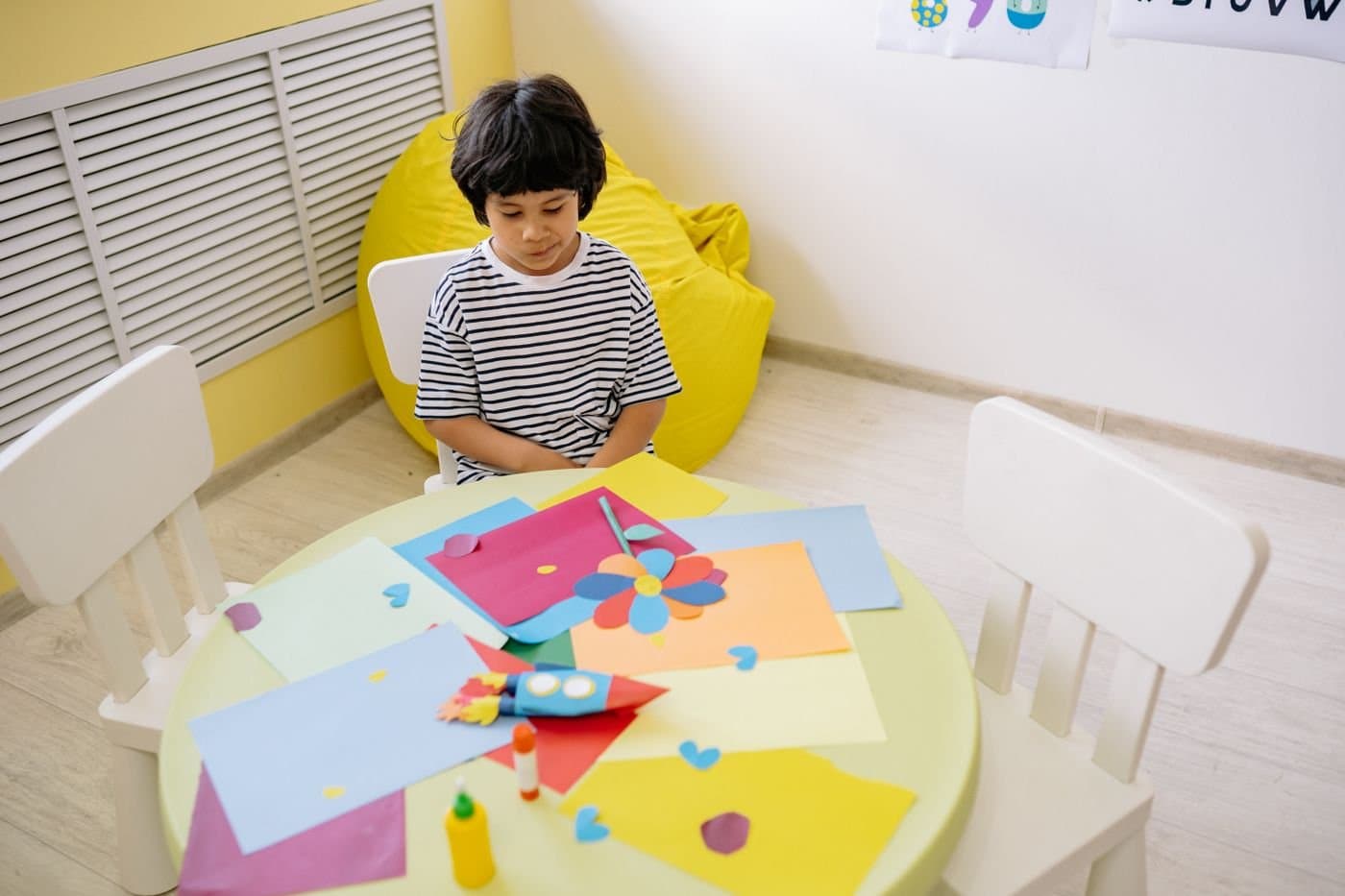
The note says "needs to speak up in class." Your child may be fluent in English at home, thinking in another language at lunch, and watching before trusting a new teacher—none of which fits on a report card comment.
Quiet is not always withdrawal. For many diaspora kids it can mean language processing, cultural respect cues, anxiety after bullying, or simply a temperament that schools misread as a problem. This guide helps you advocate without forcing your child to perform extroversion.
Grace Liu writes about education, school choice, and raising kids in families where achievement matters but childhood still deserves room to breathe.
Ketut Subiyanto / Pexels
Why "quiet" is an incomplete story
Teachers see a classroom of twenty-five. You see a child who jokes loudly at home, reads for hours, or switches to heritage language with cousins. The gap between home and school personality is normal. It becomes a problem when schools treat quiet as deficiency—especially for Asian American kids already filtered through model minority myths.
"Quiet" can mean respectful in one culture and disengaged in another. It can mean your child is listening before speaking, a pattern elders praise and American group work penalizes. It can also mean something harder: anxiety after lunch comments, fear of mispronouncing words, or a year of being overlooked because the loud kids got help first.
Before you fix your child, diagnose the room. Ask what quiet looks like in context: Does your kid have friends? Do they answer when called directly? Are they quiet only in this class or everywhere?
Language brooding vs. shyness
Bilingual and multilingual children sometimes pause longer before answering while they translate or choose which language feels safe. That pause reads as blankness to a teacher rushing through a lesson.
Heritage language at home plus English at school is not a deficit—it is labor. Your child may avoid reading aloud because classmates mocked accent before, not because they cannot read.
Share your child's language profile with teachers early: what they speak at home, whether they prefer written work first, whether small-group is easier than whole-class cold calls. Our guide on keeping language alive at home pairs with this if you are building bilingual confidence deliberately.
If evaluation for speech or language support is suggested, separate accent from disorder. Accents and code-switching are not disorders.
When quiet gets mistaken for low ability
Teachers sometimes equate participation points with intelligence. A child who masters content silently may still get "needs improvement" on effort because they will not perform for a grade.
Ask for evidence: test scores, written work, one-on-one assessments. Compare with what you see at home. If ability is high and participation scores drag grades down, negotiate alternative demonstrations—written responses, office hours, paired share before whole class.
If your child is the only Asian kid in class, notice whether Black and brown quiet kids get labeled differently too. Pattern matters. Our guide on being the only Asian kid in class helps when isolation and visibility collide.
Emails that advocate without sounding like a lawsuit
Many Asian American parents were raised to respect teachers and avoid trouble. You can be respectful and clear.
Lead with partnership: "We want to understand how [name] is experiencing class participation." Share observations from home. Ask for specific examples and dates.
Request a plan: preview questions, assigned roles in group work, check-ins after lunch if social stuff is happening.
Put follow-ups in writing after meetings. Not to be hostile—to protect memory when report card season arrives.
Our talk-to-teachers guide has more scripts if conflict feels terrifying.
Coaching your child without a personality overhaul
You do not need to turn an introvert into a debate champion. You can practice low-stakes skills: raising a hand once a day, asking a teacher one question after class, rehearsing a line with a friend before group work.
Role-play at home with humor. Let them choose one safe adult at school as a check-in person.
Avoid comparing to cousins who "present better" at recitals. That comparison teaches your child their natural style is wrong.
If anxiety is severe—stomachaches, refusal to go to school, panic—ask about counseling through school or privately. Quiet rooted in fear needs treatment, not pep talks.
When you were the quiet kid—and it still stings
Many diaspora parents flash back to their own report cards: "Could participate more." You may read your child's note as prophecy or shame.
Separate your biography from theirs. Your school may have shamed you; your child's school might be fixable with advocacy. Or your child may be fine and simply not built for performative classrooms.
If you catch yourself pushing harder because of old wounds, pause. Therapy or a honest partner conversation helps. Your child should not carry your unfinished business in their throat.
The "fine" trap for Asian American students
Model minority bias assumes quiet Asian kids are compliant, smart, and needing no help—until they collapse or disappear in class rankings.
Teachers may overlook bullying because "they don't cause problems." They may skip extension opportunities because "they'll figure it out."
If your child is bored silent or quietly struggling, both need intervention. Ask about gifted screening, reading level, social seating, and whether microaggressions are happening in group work.
Achievement pressure at home plus invisible at school is a lonely combination. Our guides on education without a childhood resume and professional-parent achievement pressure pair here if home and school both demand performance differently.
After the parent-teacher conference
Did the teacher offer specific next steps or only labels?
Labels without plans are opinions. Ask for a two-week trial and a follow-up.
Should we tell the teacher about lunch bullying or identity comments?
Yes—if your child agrees or is young enough that safety overrides privacy.
What if the teacher insists personality is the problem?
Request a counselor or second opinion. Temperament diversity is not a discipline issue.
Can we ask for written participation alternatives?
Often yes, especially with documented anxiety or language plans.
When is switching classes worth it?
When your child's mental health is sliding and admin will not adjust—the nuclear option, sometimes necessary.
How this guide was made
Grace Liu wrote and edited this guide for clarity and usefulness. About 1,046 words.